


Introduction:
Floor cleaning is one of the most important tasks that you need to perform in order to keep the house or office clean. Dirt, dust and stains build up on the floors as time passes and the correct cleaning solution is required to make the floors look new. Different cleaning chemicals are applied to the floor to clean it and knowing their purposes and advantages can make your choice. This paper will discuss the various chemicals employed in cleaning the floors, their properties and their contributions in achieving a clean environment.
The Role of Floor Cleaning Chemicals
The chemicals used in cleaning the floors are developed in such a manner that they are capable of breaking down dirt, grease and stains on various surfaces of the floor. These chemicals are used to clean and sanitize the floor that it gives it a deeper cleaning than the mopping process. The appropriate cleaning agent will make the floor clean, hygienic and safe to walk on. In addition, when using the wrong kind of chemicals, it can damage the floors, especially the delicate ones like hardwood, marble or tile. Thus, a cleaning solution should be selected, which is both effective and safe on your particular flooring.
Types of Chemicals Used for Floor Cleaning
Chemicals used in cleaning floors also exist in a variety of different types, depending on the floor type and type of cleaning required. Some of the most common chemicals used are listed below:
1. Alkaline Cleaners
Some of the most commonly used cleaning chemicals used in the floor cleaning are alkaline cleaners. They are good in dissolving grease and oils hence work well in kitchens and industrial settings where heavy soil is deposited. These cleaners act through raising the PH level of the surface to allow the dirt and the grime to be dissolved. Sodium hydroxide and potassium hydroxide are common ingredients of alkaline cleaners. Nevertheless, they are not to be applied to sensitive floors without any care because they may damage floors in case they are not applied properly.
2. Acidic Cleaners
The tough stains and mineral deposit like limescale and calcium that may be formed on the floors of a bathroom, tiles, and stone surfaces are removed using acidic cleaners. These are cleaners which contain acids such as hydrochloric acid, phosphoric acid or citric acid. Although very useful in getting rid of stubborn stains, acidic cleaners must not be applied on marble or other surfaces that are sensitive to acids as in the long run, they can cause damage to the surface.
3. Solvent-Based Cleaners
The solvent-based cleaners are used to dissolve grease, oil and other sticky substances that cannot be washed away with water-based cleaners. These cleaners can be applied in places of high foot traffic or where industries are located. These cleaners contain solvents, which dissolve the grease, and as a result, the grease is wiped off easily. They can be used on hard surfaces such as concrete and tile floors. They must also be handled with caution though since they emit strong fumes, and are flammable.
4. Neutral Cleaners
Neutral cleaning agents are cleaning agents that are balanced in terms of pH and safe to apply on all kinds of floors such as hardwood, tiles, vinyl, and linoleum. These are the mild yet effective cleaners, which can be used as regular floor cleaners. They do not cause damage to the floor’s surface, and they are perfect for use in residential and commercial spaces. There are numerous neutral cleaners that have been developed to clean up without leaving a trace so that by the time you are done cleaning your floor, it is streak-free.
5. Disinfectants and Sanitizers
Disinfectants and sanitizers are essential for killing germs, bacteria, and viruses on the floor’s surface. The chemicals are frequently utilized in hospitals, schools and restaurants where cleanliness is a factor. The elements that are usually found in disinfectants (bleach, quaternary ammonium compounds or hydrogen peroxide) are effective in destroying dangerous microorganisms. These products are not only cleaning the floors but also offer protection to them by minimizing the chances of infection.
Selecting the Right Floor Cleaner for Different Surfaces
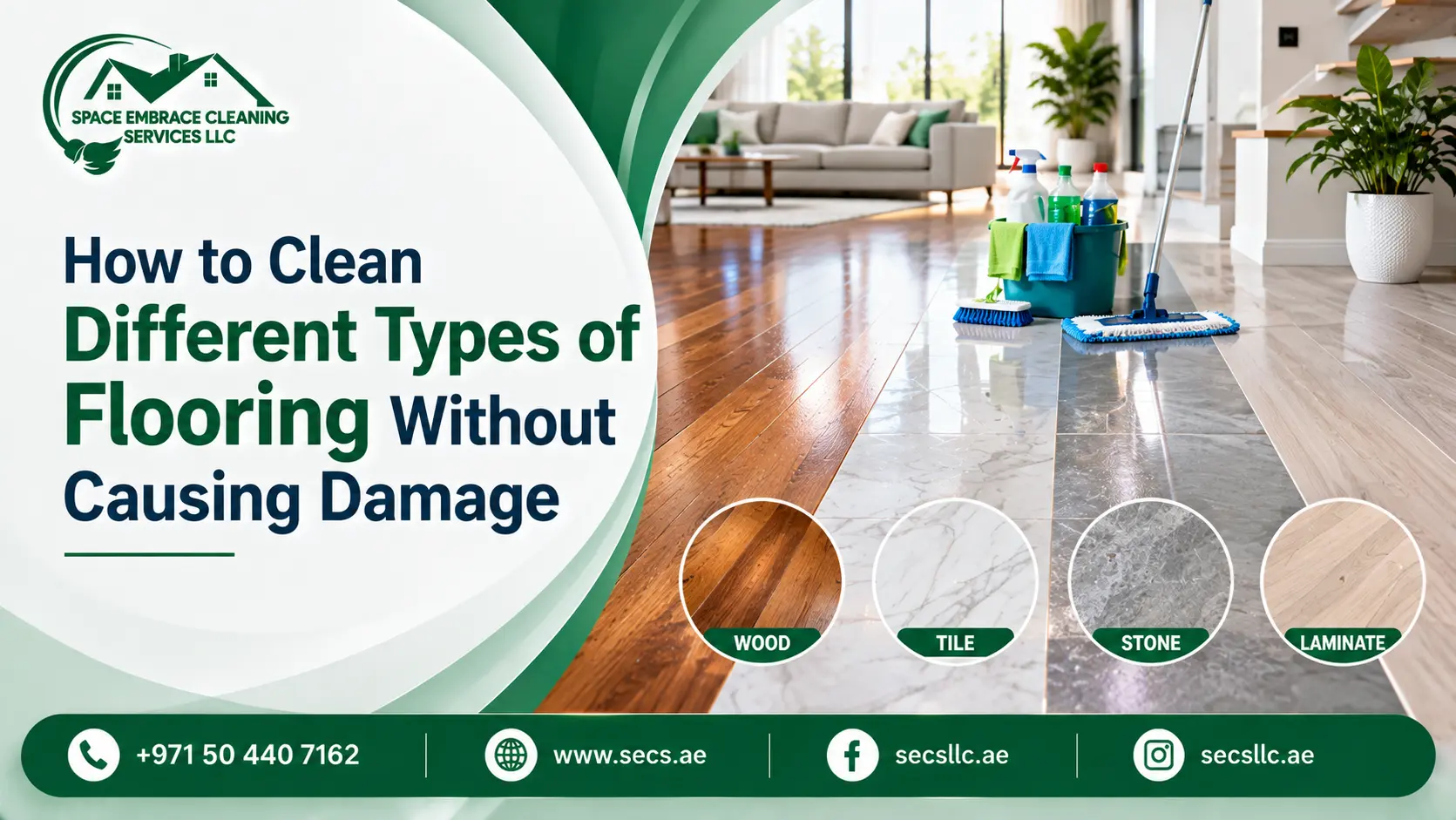
The selection of the correct chemical to clean your floor would be based on the kind of floor you are required to clean. The following is a list of the best practices to use with the various types of flooring:
Hardwood Floors
Gentle cleaning solutions should be used in hardwood floors to avoid damage to the wood. Because of this, it is advisable to use a neutral cleaner or a product specially made to clean up wood floors. Do not use acidic or alkaline cleaners, they may strip-off the finish leaving the wood exposed to scratches and wear.
Tile and Grout
The tile floors, particularly those with grout lines, need more cleaning agents which are very powerful to help to remove dirt and stains in the porous grout. Dirt and dullness of the tile surface is commonly removed using acidic cleaners or special grout cleaners to remove the dirt and restore the brightness of the surface. A neutral cleaner is enough to maintain tile floors, in the case of regular cleaning.
Stone Floors
Marble, granite and limestone are natural stone floors that are to be cleaned using pH-neutral cleaning products to prevent corrosion of the surface. The stone can be etched and dulled by using acidic cleaners. In the event of stains they are available in special cleaners to use on the stone surface, but care must also be taken to ensure that the cleaner is specific to the type of stone.
Vinyl and Linoleum
Linoleum and vinyl floors are not that difficult to clean and maintain. Neutral cleaners are good with routine cleaning, whereas solvent based cleaners may be applied on the tougher stains or grease. Noticeable, however, it should not be too severe chemicals that will result in discoloring or destruction of the surface.
The Role of Floor Cleaning Services in Maintaining Clean Floors
Although most individuals clean their own floors, professional floor cleaning services offer a better service. These services treat your floors with special chemicals and equipment to achieve effectiveness in cleaning your floors without inflicting damage to them. Floor cleaning services also employ industrial cleaning products which are stronger than the usual household products and offer deeper cleaning effects. They can also know the appropriate chemical to apply on your floor type so that you make sure that your floors are maintained in an excellent state.
Conclusion: The Right Chemical Makes All the Difference
To keep your floors looking and functioning well, it is important to select the appropriate chemical to use in cleaning the floor. Regardless of whether you clean your floors personally or bring in professional services, it is always good to know the various categories of cleaning chemicals, and their intended use in the floor cleaning process to make the best decision of cleaning your home or business. The correct cleaning agent will not only make your floors clean but also safe and in good condition.