

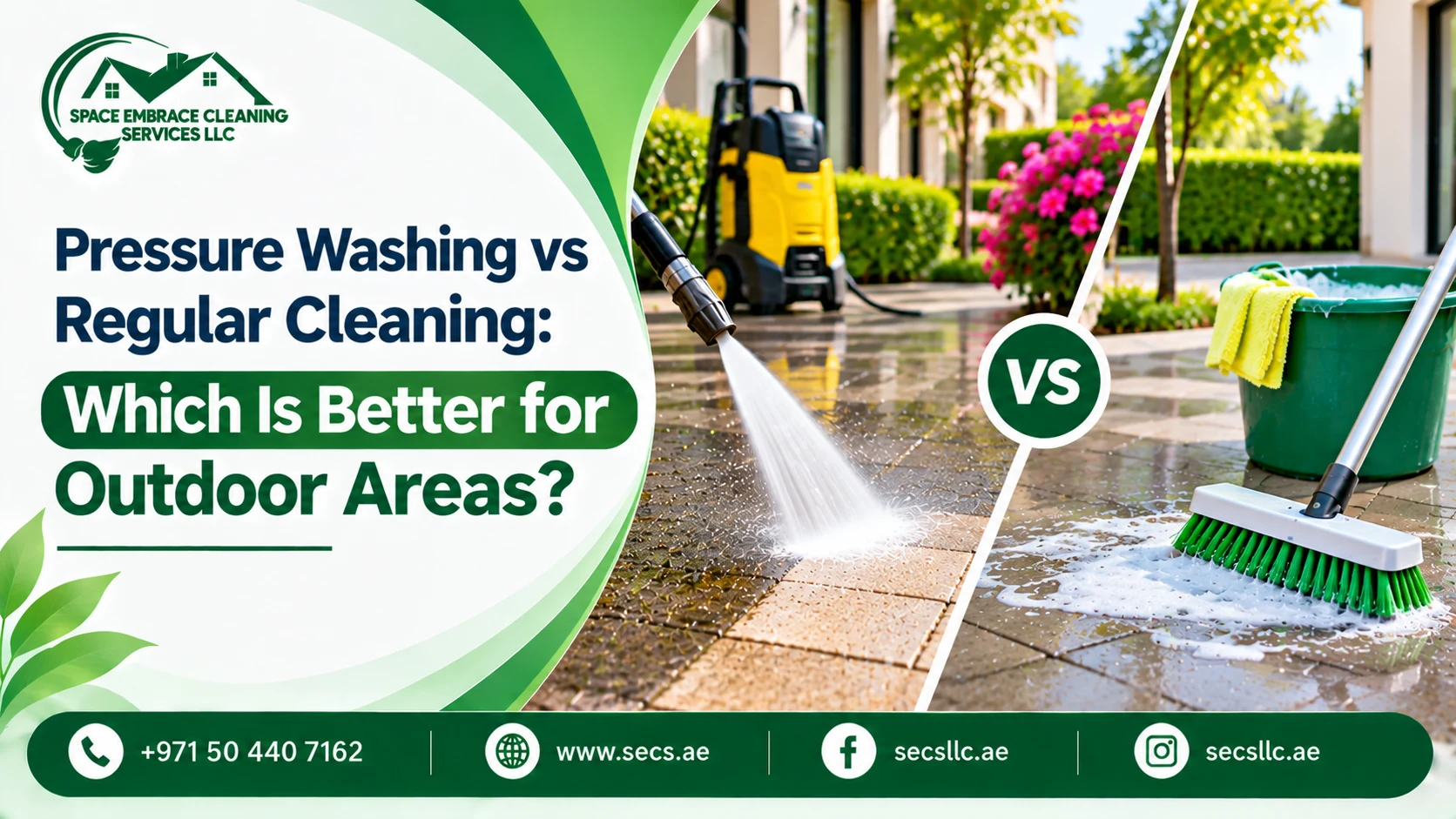
Outdoor spaces accumulate dirt, dust, stains, and other unwanted marks. Driveways and patios, garden paths, walls, and entrance doors or doors to various buildings can lose their clean look due to weather, pollution, and everyday use. Some areas become stubborn with dirt and don’t come off easily, even with frequent cleaning. Choosing the right cleaning process can save time and help preserve your property.
There are two general outdoor cleaning methods pressure washing and normal cleaning. Both approaches remove dirt, but they work differently and suit different situations.
What is Pressure Washing?
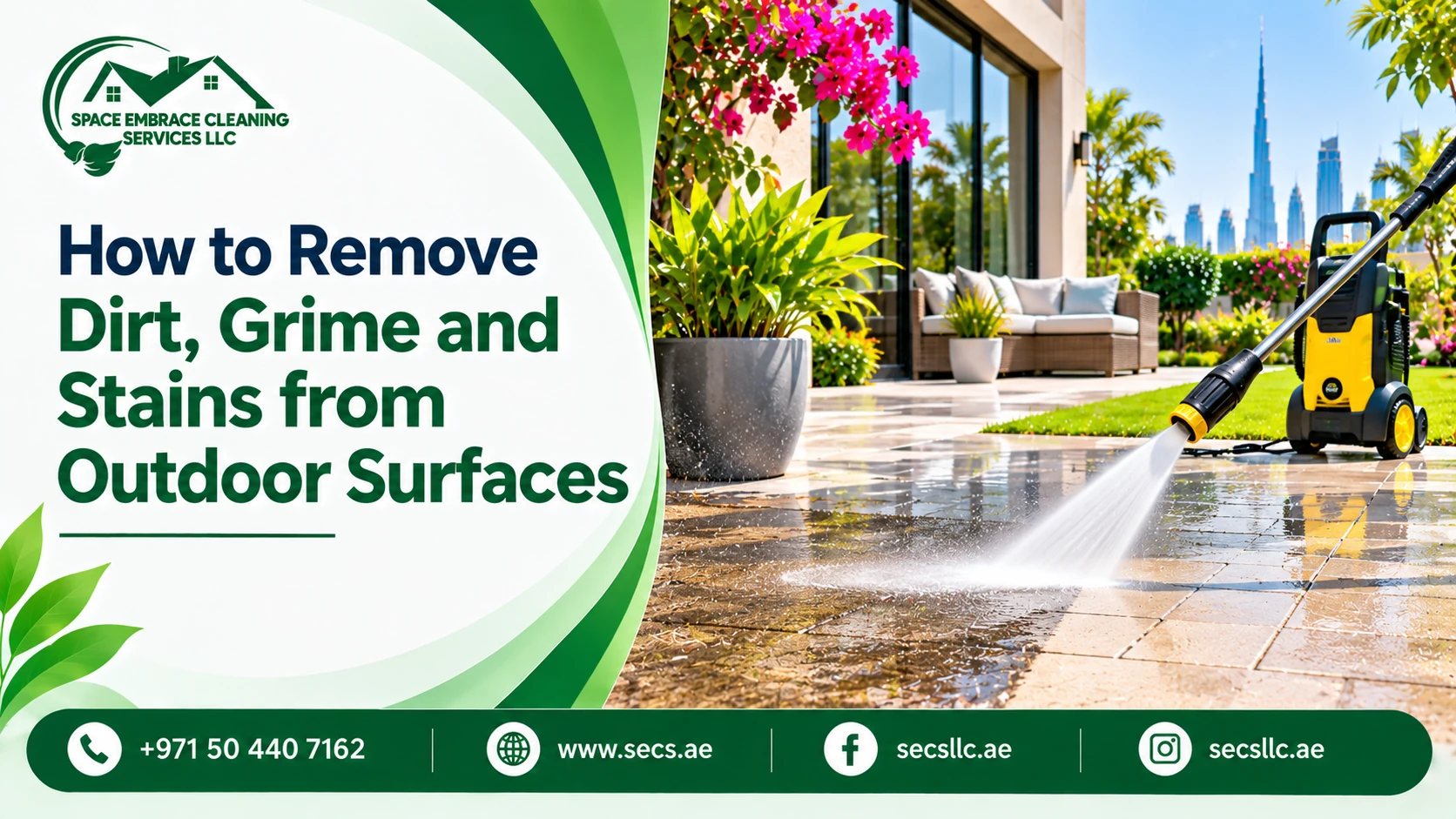
Pressure washing uses a machine that sprays water at high pressure. The pressure helps remove stubborn dirt, mud, algae, and some stains from suitable surfaces. People use it on outdoor tiles, concrete driveways, patios, and some building exteriors.
One significant advantage of pressure washing is speed. An expansive outdoor space might take much less time to wash than using a brush and a bucket. It can also reach dirt that is hard to remove manually. One risk, though, is high pressure, which can damage sensitive materials, remove paint, and force water into tight crevices. Because of this, match the pressure level and nozzle to the surface being cleaned.
What Is Routine Cleaning of Outdoors?
Outdoor cleaning involves regular cleaning with a low level of equipment and appropriate cleaning products that are used to eliminate daily dirt. It can include sweeping, wiping, brushing, washing with a mild detergent, and rinsing with water. This technique works well for garden furniture, windows, outdoor decorations, painted surfaces, and smaller sections that require gentle handling.
Regular cleaning offers the main advantage of control. You can use less pressure and focus on a specific area instead of applying high pressure across the entire surface. It is also convenient for routine maintenance because you are in a position to clean small areas as soon as they get dirty. But removing heavy stains or manually washing a large driveway can take longer and be more laborious.
1. Which Wipe Wand is Best for Cleaning Dirty Hands?
The best choice depends on the dirt and surface type. On hard surfaces like concrete paving, pressure washing can remove accumulated mud, grime, and algae. It can also clean vast areas faster than scrubbing by hand.
Regular cleaning handles light dust, fresh spills, and daily marks. A brush and gentle detergent can remove dirt, but high water pressure poses no risk. Hiring a professional may be a better option for large areas or tough stains. When comparing outdoor cleaning building exterior cleaner services (polishing), ask what they service, how they clean surfaces, and whether the quoted price includes equipment and materials. To remove grease or oil stains, you may need a appropriate cleaning product, since water pressure alone might not remove the stain. Many think that the more pressure, the better the results, and this is what must always be tried based on the problem instead of applying a perceived stronger pressure with the expectation of getting better results.
2. Which Choice Is Less Dangerous to Various Surfaces?
Not all outdoor surfaces can withstand pressure washing. Strong concrete can handle the right level of pressure, while painted walls, wood panels, fragile stone, and older bricks can be damaged. High-pressure cleaning can leave marks, strip protective coatings, or force water under the surface.
Delicate materials often hold up better with regular cleaning. Use a soft brush or cloth, and apply the cleaning solution to a small, inconspicuous spot first. If you’re unsure whether a surface can handle pressure washing, refer to the manufacturer’s instructions or a professional cleaner. The initial costly repairs may be avoided by employing a mild approach.
3. Which Alternative is the Least Time-Consuming?
A pressure washer saves time if you need to clean a large outdoor area. The machine can cover pathways, driveways, and patios much faster than by hand. This will be handy when dirt has accumulated over a large area.
Routine cleaning can be more time-consuming on a large scale, yet faster for small jobs. You rarely need a pressure washer for a couple of steps, like wiping a dirty outdoor table. You must also wait to set up the machine, connect the water supply, and clear the area before you can begin. Consider the job’s scope and choose a more convenient method.
4. What about Cost and Equipment?
Basic supplies like a broom, bucket, brush, cloth, and mild detergent are common tools for cleaning with a broom. Since most homeowners already have these, the price doesn’t have to be too high. Still, bigger jobs may take more time or require repetitive cleaning.
Pressure washing requires the right machine, water, and sometimes special additives or cleaning solutions. It may not be worth buying a machine if you only need it a few times.
5. Which Should Be Used In Terms Of Maintaining Regularly?
Frequent cleaning can help keep the outdoors clean year-round. Picking up leaves, wiping furniture, and wiping fresh stains can prevent dirt from building up. These minor chores can reduce the need for deep cleaning later.
Pressure washing should be an occasional expense for appropriate surfaces, not a daily chore. Don’t use it excessively or at the wrong pressure, as it can damage surfaces. A balanced plan includes regular manual cleaning and pressure washing, as appropriate for the dirt and surface.
6. Is Method or Monitoring More Effective at Removing Mold and Algae?
On surfaces that remain wet outdoors, mold and algae may develop. They can make patios, pathways, and driveways look dirty and slippery. You can remove growth from suitable materials with pressure washing, but use appropriate pressure to avoid damaging the surface. Some areas may also require a cleaning solution to treat any remaining growth.
Regular cleaning can control light dirt before it accumulates. A damp cloth and a cleaning product will likely work on smaller objects. For stubborn mold and algae, choose a cleaning technique based on the surface and follow the product directions. Taking steps to limit moisture can also help keep outdoor areas clean longer.
7. Which Method is Most Suitable for Long-Term Maintenance?
Regular cleaning and pressure washing can serve an auxiliary role in maintaining outdoor areas if used properly. Routine cleaning removes loose dirt, dust, and fresh stains before they become harder to clean. It also helps homeowners identify minor issues, like cracks, chipped paint, or wear marks, before they escalate.
For example, a lack of pressure washing can lead to a deeper clean when dirt accumulates on the right surfaces. But excessive pressure can damage some materials. An efficient maintenance plan integrates a routine cleaning system with infrequent pressure washing as and when necessary. This will help maintain the beauty of the outdoor space while keeping it ready and preventing unnecessary cleaning expenses.
Conclusion
Both play significant roles in outdoor maintenance. On the right surfaces, pressure washing can remove hard-to-clean dirt, whereas a standard cleaning is easier on concrete surfaces and for daily mess. The right course of action depends on the surface, the stain type, the area size, and your property’s condition.
The easiest process to start with, if effective, will give the best chance of success. Use better cleaning chemicals, follow safety measures, and avoid bending to examine areas under pressure, as this can cause damage. If dirt is hard to wash off or the area is heavily soiled, consider professional help. A regular cleaning schedule keeps outdoor areas appealing, protects building materials, and minimizes costly repairs.