

Outside surfaces are exposed to dirt, dust, rain, and sunlight and pollution day in, day out. These conditions can leave marks on walls, driveways, patios, garden paths, and other areas around your property. Whopper and Cough: Dirt and grime may cause your home or business premises to appear untidy. Some stains are also harder to remove the longer they sit on a surface. Frequent cleaning helps keep outdoor areas clean, safe, and beautiful.
You don’t need costly equipment or powerful chemicals to clean outdoor areas. You can eliminate a variety of common stains at home with the right tools and techniques. Different surfaces,, however,, require different kinds of care. What works well on concrete can ruin natural stone or painted walls. Learning to clean each material properly can help you get better results without causing damage.
1. Identify The Surface Before Cleaning
Always make sure to identify a surface before beginning to clean it. Concrete, brick, natural stone, wood, glass, and painted walls require different cleaning methods. Some materials can be scrubbed, gently, while others may scratch or lose their finish if you use the wrong tool.
Whenever possible, read the care instructions of the manufacturer. Start with a small, inconspicuous area. Wipe with a small amount of water and a low-concentration detergent, and watch for any colour change or damage. This is just a measure that will help you choose a safe cleaning agent before treating a larger area.
2. Cleanse Off Dirt And Dust
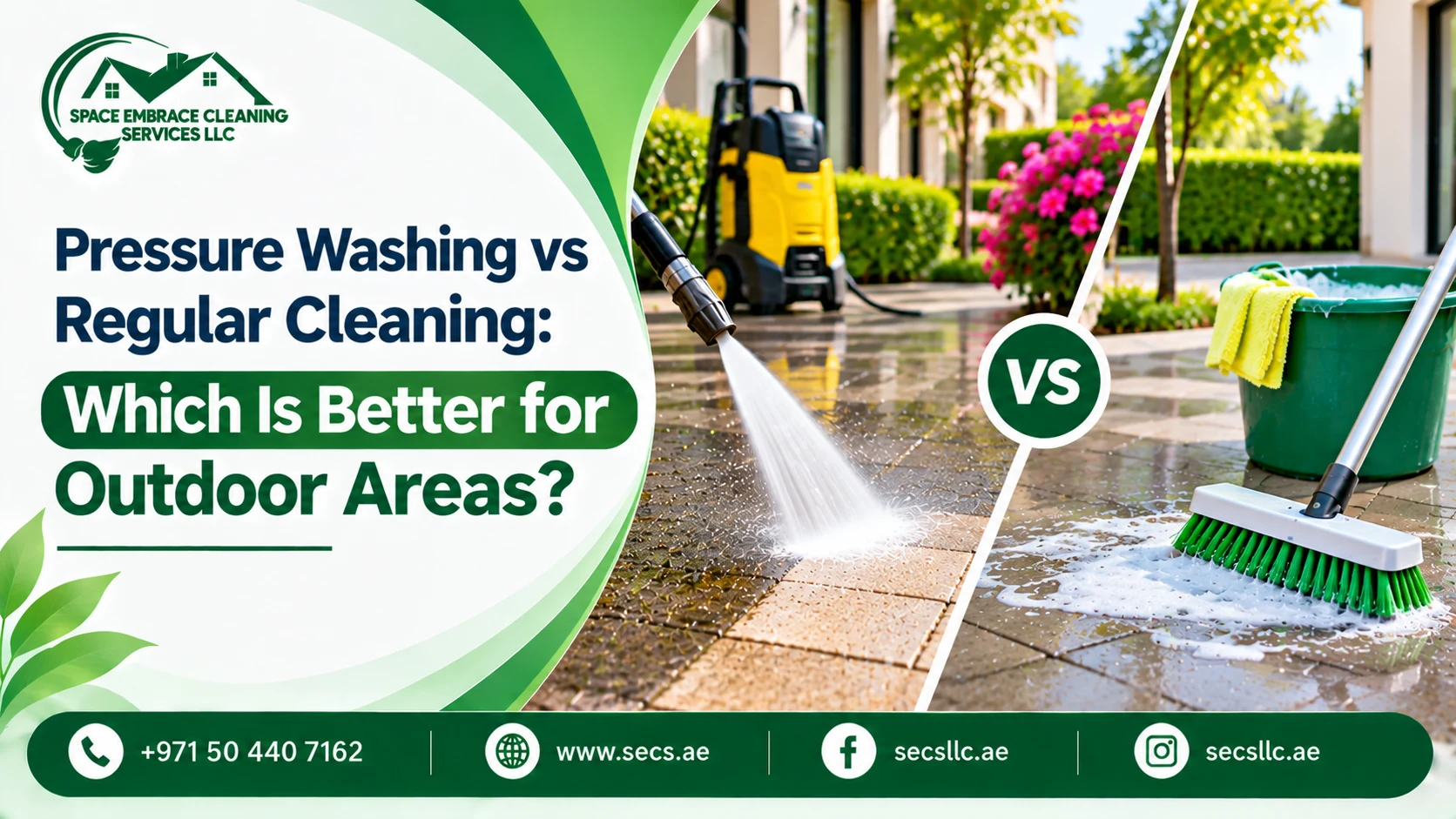
Remove loose dirt in the first step of outdoor cleaning. Patios, driveways, balconies and walkways can accumulate dust, dry leaves, sand and small pieces of garbage. If you add water before removing this material, it can turn to mud and become harder to remove.
Clean hard surfaces with a firm broom and soft surfaces with a soft brush. Clean up the area, paying close attention to corners and wall spaces. In the case of outdoor furniture, a dry cloth or a soft brush is used to remove loose dust. Removing the surface dirt makes subsequent cleaning easier and helps prevent scratches from abrasive grit.
3. Clean With Water And Mild Cleaners.
Simple everyday dirt and light grime usually require only warm water and a light detergent. Prepare the product as per label directions. Use a sponge, cloth, or other appropriate brush, apply the solution to the dirty area, and then massage it in. Clean small areas at a time so the solution doesn’t dry before you can remove it. When comparing outside building cleaning services in Dubai, check whether the company has worked with your building material, has the right equipment, and takes proper safety measures.
4. Take Grease And Oil Stains
Driveways, garage floors and outdoor parking areas are likely to have oil and grease stains. Once these marks set, they can be hard to remove because oil can soak into porous surfaces like concrete. Clearing the spill promptly increases the likelihood of removing it effectively.
Initially, place fresh oil on the surface with a oil-absorbing material. The percolation will then allow the liquid to be absorbed, followed by collection and disposal according to local regulations.
5. Treat Mold, Algae And Green Marks
Damp, dark external spaces may develop mold, algae, or green stains. These can appear on walls, paving stones, steps, fences, and other surfaces. Beyond changing the appearance, algae can make walkways slippery when wet.
Start by removing loose growth with an appropriate brush. Use a surface-specific cleaner and follow the label instructions. When the label instructs you to do so, protect the surrounding plants and keep cleaning solutions away from the drain. Do not mix various chemicals to form a more powerful cleaner.
6. Wipe The Exteriors Of Buildings
Building exteriors accumulate dust, automobile pollution, rain stains, and stains caused by nearby trees. The appropriate cleaning procedure depends on the wall material, paint, and the building’s condition. High pressure can damage paint, weaken mortar, or allow water to penetrate.
Begin with warm water and a light brush in the proper places. Pour water onto electrical fittings, windows, vents or cracks. It may be a safer to hire a professional for high walls, stains that won’t come out easily, and weak finishes.
7. No New Dirt And Stains
With frequent cleaning, your outdoor surfaces may not get as much cleaning as they would have done otherwise. Clean Sweep paths and driveways frequently to remove fallen leaves and clean small spills as quickly as possible. Clear drains to prevent water buildup around outdoor areas. A sealer can minimize water absorption and make stains easier to remove.
Conclusion
Once you have a suitable cleaning process, you can easily remove dirt, grime, and stains from the premises. Clean loose dust first, determine what the surface is made of and then clean it with suitable cleaning agent. Mold and algae can be hard to treat, and harsh chemicals or aggressive treatments can destroy your property, so treat oil stains as quickly as possible. Regular maintenance is also needed to keep outdoor areas clean.
It is often advisable to sweep and clean and clean up spills and clean surfaces so they are not damaged. For stubborn stains, high walls, or areas that require special equipment, consider hiring a trained cleaning professional. With creativity, you can keep your outdoor areas cleaner, safer, and in better condition year-round.